
Intel Could Return to the Memory Business: CEO Hints at Stacking RAM Directly With Future CPUs
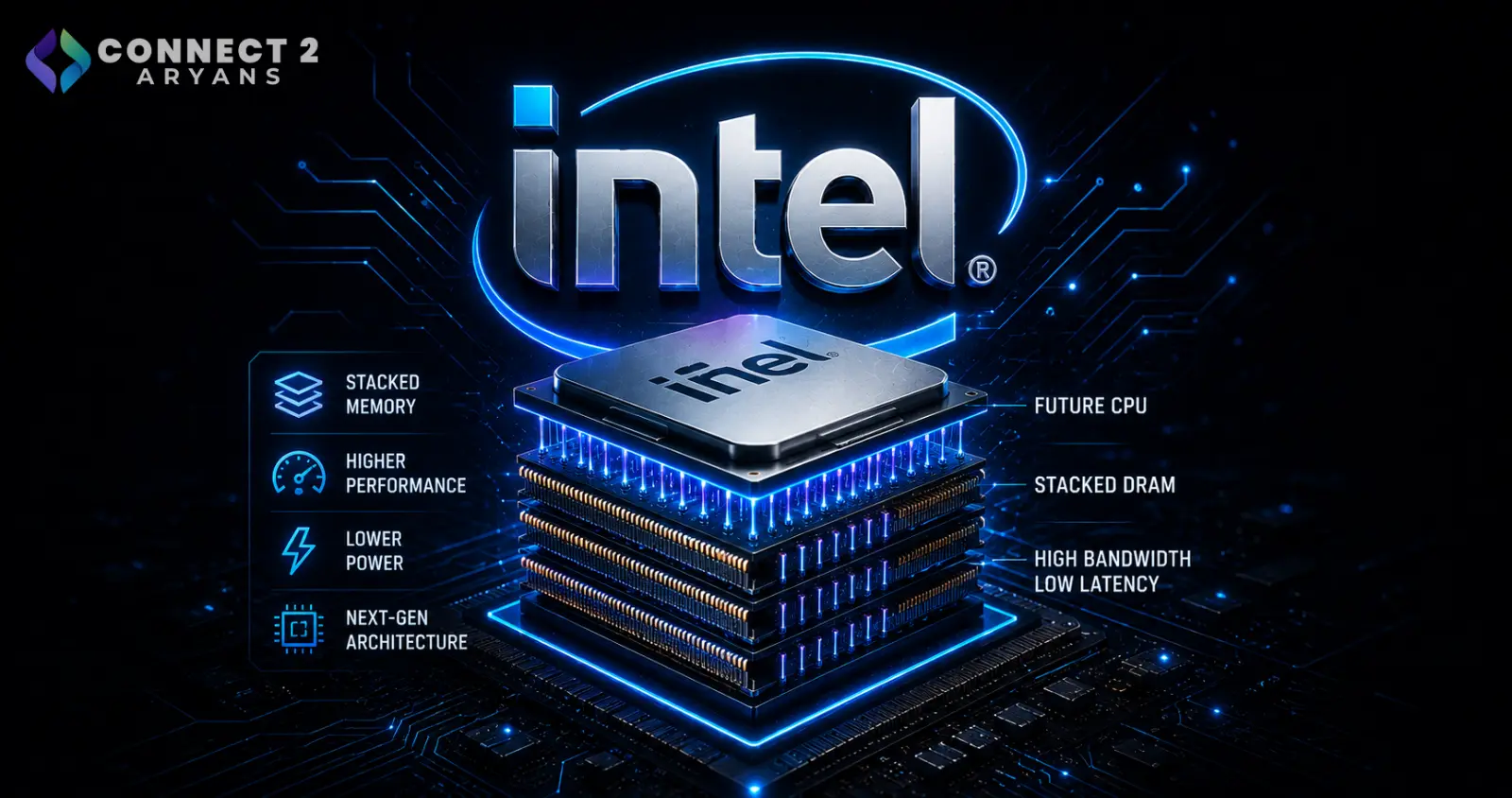
Intel Could Return to the Memory Business: CEO Hints at Stacking RAM Directly With Future CPUs
Intel could be preparing to revisit one of the oldest parts of its history: memory.
Intel CEO Lip-Bu Tan has revealed that the company is interested in exploring new memory architectures as artificial intelligence creates enormous demand for faster, higher-capacity memory systems.
During a recent interview, Tan discussed the possibility of bringing processors and memory significantly closer together—including architectures that could involve stacking memory with the CPU.
That does not mean Intel has announced a new Intel-branded DDR5 RAM kit.
It also doesn't mean Intel has officially confirmed that it will return to manufacturing conventional DRAM.
What Intel's CEO is describing is potentially much more interesting.
The company is looking at ways to rethink the relationship between compute and memory.
And with the global memory industry currently experiencing extraordinary demand from AI infrastructure, the timing is significant.
What Did Intel CEO Lip-Bu Tan Actually Say?
The comments came during a podcast interview involving Intel CEO Lip-Bu Tan.
Tan discussed how memory has traditionally been considered a commodity business—something Intel itself moved away from decades ago.
But according to Tan, the situation is changing.
Memory is becoming increasingly strategic because modern computing systems need enormous bandwidth and capacity, particularly for artificial intelligence.
Tan specifically discussed exploring ways to stack memory and CPUs together, potentially creating architectures where memory sits physically much closer to the processor.
This is important because moving data has become one of the major performance challenges in modern computing.
The CPU can only process information as quickly as the system can provide it.
Intel Has NOT Announced New Desktop RAM
Before going further, there is an important distinction.
Intel has not announced Intel DDR5 desktop memory.
There is currently no confirmed:
- Intel DDR5 RAM kit
- Intel DIMM product family
- Intel consumer DRAM launch date
- Intel memory pricing
- Intel desktop RAM specification
Tan's comments are about future memory architecture and technology strategy, not a confirmed retail RAM product.
The headline that Intel could “return to memory” therefore needs context.
A future Intel memory strategy could look very different from companies simply manufacturing DIMMs for desktop PCs.
Why Would Intel Be Interested in Memory Again?
The answer is largely connected to AI.
Artificial-intelligence workloads require enormous amounts of data to move between processors and memory.
Modern AI accelerators therefore depend heavily on extremely fast memory systems.
This has transformed memory from something that was often treated as a relatively interchangeable component into one of the most strategically important parts of advanced computing.
The ongoing memory shortage is another indication of just how dramatically demand has changed.
Fresh reporting this week continues to show tight memory supply as AI infrastructure consumes enormous quantities of advanced memory and semiconductor manufacturing capacity.
Intel sees an opportunity to innovate in that environment.
Why Put Memory Closer to the CPU?
In a conventional desktop PC, the processor and system memory are separate.
You have:
CPU → motherboard memory controller/interface → DDR5 DIMMs
The processor constantly reads information from and writes information to system memory.
That works extremely well for general-purpose computers because DIMMs are replaceable and capacity can easily be upgraded.
But physical distance and electrical connections create limitations.
Memory located physically closer to the processor can potentially provide:
- Higher bandwidth
- Lower latency
- Better efficiency
- Reduced data movement
- More compact packaging
These benefits become increasingly important as processors grow more powerful.
What Does “Stacking Memory and CPU” Mean?
One possibility is advanced packaging.
Instead of placing the processor in one part of the system and memory modules several centimeters away on the motherboard, manufacturers can integrate memory much closer to the compute silicon.
In some architectures, memory can be placed alongside the processor inside the same package.
More advanced designs can potentially use vertical stacking.
Conceptually, instead of:
CPU → motherboard → RAM
you move toward something closer to:
CPU ↔ Memory
inside an integrated package.
The exact architecture Intel might pursue has not been announced, so it would be premature to claim how Intel's implementation will work.
But the goal is clear:
Reduce the distance and bottlenecks between processing and data.
We've Already Seen This Idea in Modern Hardware
Integrated memory isn't a completely new concept.
Modern computing has increasingly moved toward tighter integration between processors and memory.
Apple Silicon is one well-known consumer example, where memory is integrated closely with the system-on-chip architecture.
GPUs provide another example.
Graphics processors use dedicated high-speed memory positioned around or close to the GPU package.
AI accelerators can go significantly further by using technologies such as high-bandwidth memory.
Intel's comments suggest the company is investigating how tighter CPU-memory integration could become part of its own future architecture strategy.
The AI Boom Has Changed the Value of Memory
For decades, consumer PC discussions often treated RAM as one of the simpler components.
Choose:
DDR generation → capacity → speed → latency
and install it.
AI infrastructure has changed the economics of memory.
Large AI systems require enormous memory capacity and bandwidth.
Training and running increasingly large models means accelerators need access to huge quantities of data extremely quickly.
This has helped transform advanced memory into one of the semiconductor industry's most valuable resources.
The effects are now being felt well beyond AI servers.
Consumer DDR4 and DDR5 markets have also experienced supply and pricing pressure during 2026.
Could Intel Manufacture RAM Again?
Possibly—but that is not confirmed.
Intel has an unusually important history in memory.
In fact, memory was central to Intel's early business.
The company produced semiconductor memory products before eventually shifting its focus heavily toward microprocessors.
Intel later participated in flash-memory technologies as well, including businesses associated with NAND and Optane.
Tan's latest comments therefore don't represent Intel discovering memory for the first time.
They represent a company with deep historical experience reconsidering whether memory has again become strategically important.
Why Intel Left the Original Memory Business
Intel's shift away from DRAM decades ago is one of the most important moments in the company's history.
Memory became increasingly competitive and commoditized, particularly as Japanese semiconductor manufacturers became extremely strong in DRAM manufacturing.
Intel ultimately redirected its resources toward microprocessors.
That decision helped create the Intel most PC users know today.
The company became synonymous with processors such as:
Pentium
Core
Core i3
Core i5
Core i7
Core i9
and now:
Core Ultra
The interesting part of Tan's latest comments is that he believes the economics and strategic importance of memory may be changing again.
Today's Intel Is Also a Manufacturing Company
Intel's potential advantage isn't simply designing CPUs.
Intel also operates semiconductor fabrication facilities and is investing heavily in advanced manufacturing.
The company is currently expanding its foundry strategy while developing new process technologies and advanced packaging capabilities.
That combination could matter enormously if future processors require much tighter integration between compute and memory.
Instead of treating the CPU, memory and packaging as completely independent components, future systems could increasingly be designed together.
Intel's ability to manufacture and package complex semiconductor products could therefore become an important part of this strategy.
CPU Performance Is Increasing Faster Than Traditional Memory
One reason memory architecture matters is that processor performance has increased dramatically.
CPUs now contain:
- More cores
- Larger caches
- Specialized accelerators
- Integrated graphics
- NPUs
- Faster interconnects
But all those processing resources need data.
If memory can't supply information quickly enough, additional compute capability can sit idle.
This is often described broadly as the memory wall.
Making processors faster doesn't completely solve the problem if they spend too much time waiting for data.
Bringing memory closer to compute is one way the semiconductor industry can attack that limitation.
Cache Has Already Been Moving Closer to CPUs
PC gamers have already seen how valuable additional memory close to processor cores can be.
AMD's 3D V-Cache technology stacks additional cache on processors to dramatically increase available cache capacity.
That isn't the same as stacking conventional system RAM with a CPU.
But it demonstrates the underlying principle:
Data located closer to the CPU can be extremely valuable.
Games that benefit from larger cache can experience substantial performance improvements on AMD's X3D processors.
Future CPU-memory integration could push the idea much further.
Could Stacked Memory Replace DDR5 DIMMs?
Not necessarily.
Traditional DIMMs have major advantages.
Most importantly:
They are upgradeable.
A desktop user can buy a system with 16GB today and replace it with:
32GB
64GB
or even more later.
Memory permanently integrated into a processor package doesn't provide the same flexibility.
This means future computers could potentially use a combination of technologies rather than eliminating DIMMs entirely.
For example, a processor could theoretically contain a certain amount of extremely fast integrated memory while still supporting conventional system RAM.
However, Intel has not announced such a design, so this should be considered an architectural possibility rather than a confirmed Intel product.
What Would This Mean for Gaming PCs?
For gaming, memory latency and bandwidth can matter considerably.
Modern games continuously move information involving:
- Game logic
- Physics
- Assets
- CPU instructions
- GPU data
- Background processes
Faster access to frequently used data can improve CPU efficiency.
But integrated or stacked memory would not automatically make every game faster.
Performance would depend on:
- CPU architecture
- Cache design
- Memory bandwidth
- Memory latency
- Game engine
- GPU performance
- Software optimization
Until Intel announces actual hardware, there is no meaningful gaming benchmark to discuss.
Current Intel PCs Still Use Conventional DDR5
Nothing about Tan's comments changes current Intel desktop hardware.
Modern Intel desktop platforms continue to use conventional system memory.
For example, Connect2Aryans currently lists the Intel Core Ultra 7 265KF, which supports DDR5 memory and uses Intel's LGA1851 desktop platform.
View Intel Core Ultra 7 265KF on Connect2Aryans
Any future CPU-memory stacking technology should therefore be treated separately from today's Core Ultra desktop ecosystem.
DDR5 Remains the Important Memory Standard Today
For anyone building a PC now, DDR5 remains the relevant modern memory technology.
Intel's future research doesn't suddenly make DDR5 obsolete.
Current Intel and AMD platforms rely extensively on DDR5.
That includes mainstream motherboards such as the MSI B760 GAMING PLUS WIFI DDR5, which supports DDR5 memory alongside Intel's LGA1700 processors.
View MSI B760 GAMING PLUS WIFI DDR5 on Connect2Aryans
For buyers building today, choosing suitable DDR5 capacity and speed remains far more important than worrying about an unannounced future Intel memory architecture.
The Timing Is Particularly Interesting Because of the RAM Crisis
Intel's comments would be interesting in any year.
In 2026, they're considerably more significant.
Memory supply is currently under pressure as AI infrastructure competes aggressively for advanced semiconductor resources.
Fresh reports this week continue to point toward tight supply across the memory industry.
That creates a powerful incentive for companies to rethink memory architecture.
If memory becomes one of the primary constraints on computing performance and system availability, controlling more of the technology surrounding memory becomes strategically valuable.
Intel appears to recognize that.
Could Intel Compete With Samsung, SK Hynix and Micron?
This is where the story becomes more complicated.
The modern memory industry is dominated by companies with enormous expertise and manufacturing capacity.
Entering conventional commodity DRAM production would require Intel to compete in a mature, capital-intensive market.
But Intel doesn't necessarily need to become another conventional DRAM supplier.
Its opportunity could instead involve:
CPU architecture + advanced packaging + memory integration + foundry manufacturing
That would be a very different strategy from simply selling Intel-branded DDR5 DIMMs.
Tan's comments appear much more focused on architectural innovation than on recreating Intel's old commodity memory business.
AI Could Be the First Major Target
Although PC enthusiasts naturally think about desktop RAM, the most obvious immediate application for advanced CPU-memory integration is AI and data-center computing.
AI workloads are extremely sensitive to memory capacity and bandwidth.
Moving enormous models between processors and memory consumes:
- Time
- Power
- Interconnect bandwidth
Reducing those data-movement penalties can improve efficiency significantly.
That's especially important in data centers where thousands of processors may operate simultaneously.
Even relatively small efficiency improvements can become enormous when multiplied across large AI clusters.
But Consumer CPUs Could Eventually Benefit
Technology developed for servers frequently works its way into consumer hardware over time.
Examples include:
- Multi-core CPUs
- Large caches
- Chiplets
- Advanced packaging
- High-speed interconnects
- AI accelerators
If Intel develops effective new ways of integrating processors and memory for AI or server hardware, some of those technologies could eventually influence consumer processors.
That doesn't mean the next Intel desktop CPU will contain stacked RAM.
There is currently no evidence confirming that.
But Intel's CEO discussing the concept publicly makes it a technology worth watching.
What Could Be the Downsides?
Integrated memory creates trade-offs. Upgradeability Soldered or package-integrated memory can't be replaced as easily as DIMMs. Capacity Choices Buyers may need to choose memory capacity when purchasing the processor or system. Repairability If memory and compute are integrated, a failure could potentially require replacing a larger and more expensive component. Cost Advanced packaging can be expensive. Thermal Management Putting multiple high-performance silicon components close together can complicate cooling. These challenges are why conventional DIMMs remain extremely useful despite their physical distance from the processor.
Integrated memory creates trade-offs.
Upgradeability
Soldered or package-integrated memory can't be replaced as easily as DIMMs.
Capacity Choices
Buyers may need to choose memory capacity when purchasing the processor or system.
Repairability
If memory and compute are integrated, a failure could potentially require replacing a larger and more expensive component.
Cost
Advanced packaging can be expensive.
Thermal Management
Putting multiple high-performance silicon components close together can complicate cooling.
These challenges are why conventional DIMMs remain extremely useful despite their physical distance from the processor.
Could Future CPUs Be Sold by Memory Capacity?
If integrated memory becomes common, processor purchasing could eventually become more complicated.
Instead of choosing:
Core Ultra 7 + separate 32GB DDR5 kit
future integrated systems could potentially be sold in configurations resembling:
Processor + integrated memory capacity
We already see this purchasing model in some tightly integrated computing platforms.
Again, Intel hasn't announced this model for future consumer CPUs.
But tighter memory integration naturally raises questions about how future PCs could be configured and upgraded.
What Does This Mean for PC Builders in Pakistan?
For now:
Nothing changes about how you should build a PC.
Current Intel and AMD desktop platforms still use conventional DDR5 memory.
Don't delay a necessary PC purchase because Intel is researching future memory architectures.
Instead, choose components based on what is available today.
For Intel builders, that means comparing the processor, motherboard and DDR5 memory together.
View MSI PRO B760M-E DDR5 on Connect2Aryans
The live Connect2Aryans listing confirms DDR5 support on this Intel B760 platform.
Why This Story Matters More Than an Intel-Branded RAM Kit
The most interesting interpretation of Tan's comments isn't:
Intel might sell RAM again.
It's:
Intel believes memory has become important enough to rethink how CPUs and memory are physically designed together.
That could have much larger consequences.
The traditional PC architecture keeps major components relatively independent:
CPU
RAM
GPU
Storage
Modern semiconductor design is increasingly integrating those functions more tightly.
Intel's exploration of CPU-memory stacking fits directly into that trend.
Intel Is Trying to Reinvent More Than Its CPUs
The comments also arrive while Intel is making major changes across its business.
The company is investing heavily in manufacturing and attempting to strengthen its position in advanced semiconductor production.
Reuters reported this week that Intel is raising substantial new capital as it pushes forward with its manufacturing strategy and responds to increasing AI-driven semiconductor demand.
Memory could therefore become one piece of a much larger Intel transformation involving:
Process technology
Advanced packaging
Foundry manufacturing
CPUs
AI
Memory architecture
If those pieces come together, Intel could eventually compete on much more than processor core performance.
Frequently Asked Questions
Is Intel returning to the RAM business?
Not officially yet. Intel CEO Lip-Bu Tan has expressed renewed interest in memory technology and discussed architectures involving CPU-memory stacking, but Intel has not announced a conventional DRAM business or new consumer RAM products.
Is Intel making DDR5 RAM?
Intel has not announced Intel-branded DDR5 desktop DIMMs as part of these comments.
What did Intel say about stacking memory?
Lip-Bu Tan discussed exploring new architectures that bring memory and CPUs closer together, including stacking approaches. Exact product designs have not been announced.
Why does Intel want to work on memory again?
Memory has become increasingly strategic because AI and high-performance computing require enormous bandwidth and capacity. The current memory shortage further highlights the importance of memory supply and architecture.
Will stacked memory replace DDR5?
There is currently no Intel announcement saying that it will. Conventional DDR5 DIMMs remain the standard for current modern desktop platforms.
Would integrated RAM make CPUs faster?
Bringing memory closer to compute can potentially improve bandwidth, latency and efficiency, but real-world performance depends on the complete architecture and software. Intel has not announced hardware that can currently be benchmarked.
Would CPU-integrated memory still be upgradeable?
That depends entirely on the implementation. Memory integrated directly into a processor package would generally be less upgradeable than conventional DIMMs, although future systems could potentially combine integrated and external memory.
Does Intel Core Ultra currently use stacked system RAM?
Current Intel desktop Core Ultra processors continue to support conventional DDR5 system memory. The CPU-memory stacking discussed by Intel's CEO concerns potential future architectures.
Conclusion
Intel's potential return to memory is much more interesting than simply imagining Intel-branded RAM sticks.
CEO Lip-Bu Tan says memory has become strategically important again and has specifically discussed exploring architectures that bring processors and memory much closer together—including CPU-memory stacking.
Nothing has been announced as a commercial consumer product yet.
There is no confirmed Intel DDR5 RAM lineup, no stacked-memory desktop CPU and no launch date.
But the direction matters.
AI has transformed memory into one of the most valuable and constrained resources in computing, while the current 2026 shortage demonstrates how heavily the entire technology industry depends on memory supply.
Intel appears to believe the solution isn't simply producing faster CPUs.
The company is looking at how compute and memory themselves could be redesigned together.
If that work eventually reaches consumer hardware, it could change how future processors are built—and potentially how we think about RAM inside a PC.
For now, PC builders should continue choosing hardware based on today's platforms. DDR5 remains central to modern Intel systems, and any future Intel memory architecture is still something to watch rather than something buyers can purchase today.
View Intel Core Ultra 7 265KF on Connect2Aryans
View MSI B760 GAMING PLUS WIFI DDR5 on Connect2Aryans
View MSI PRO B760M-E DDR5 on Connect2Aryans
Browse our full range of PC components on Connect2Aryans, with warranty support included.