RAM Prices Briefly Dropped in Spring 2026 — Then Got Worse. Here's What Happened
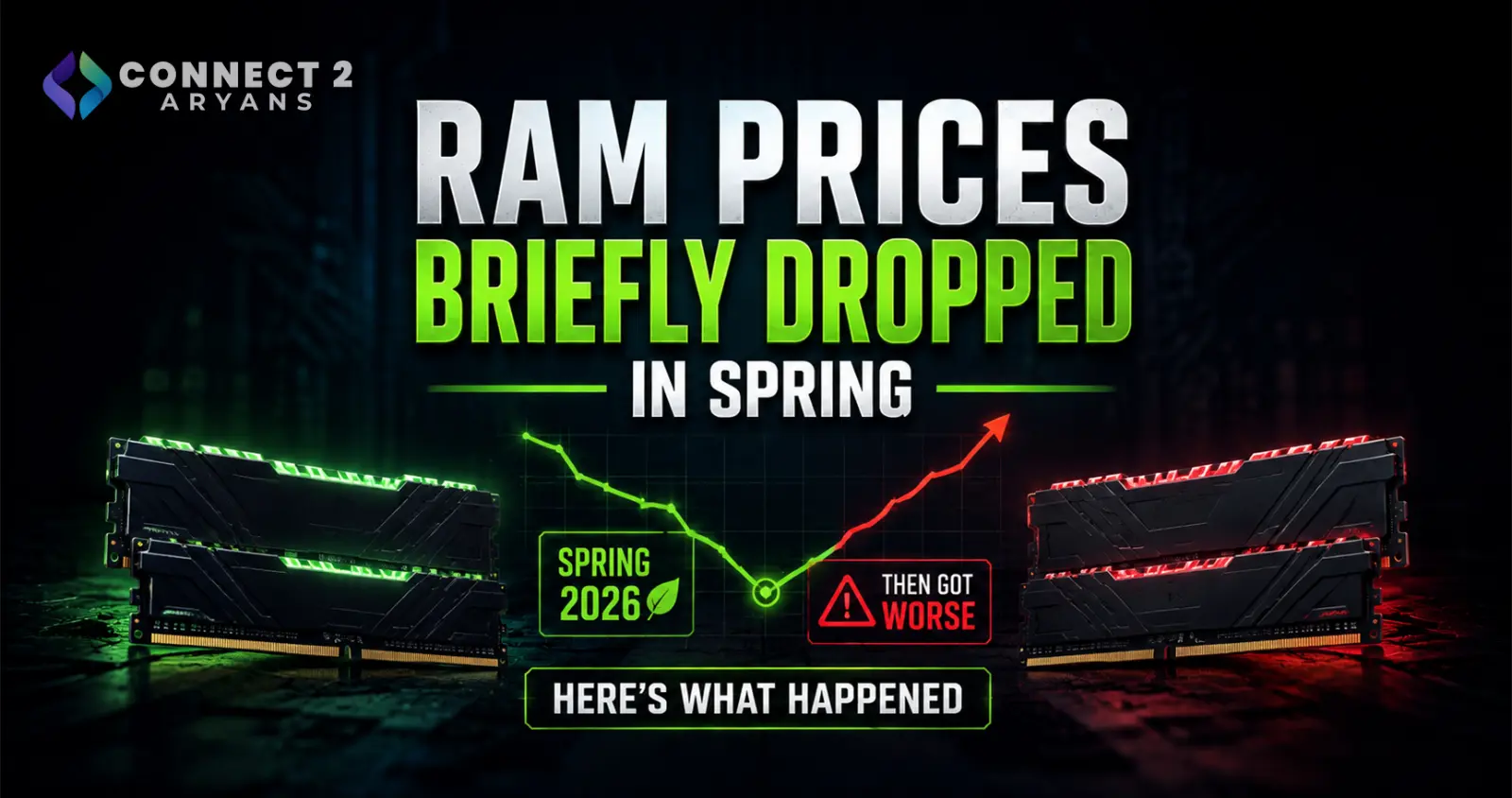
For a few weeks in March 2026, there was genuine, data-backed hope that RAM pricing might finally be turning a corner. Retail DDR5 prices fell in Germany, the US, and China simultaneously — the first real relief after eight straight months of increases. That hope didn't last. Here's the full timeline of what happened, and where things actually stand now.
The Brief Spring Correction
In March 2026, multiple markets saw genuine retail DDR5 price drops at the same time:
- German retail DDR5 pricing fell 7.2% month-over-month — the first monthly decline after eight consecutive months of increases
- A Corsair 32GB DDR5 kit in the US dropped over 20%, from a peak of roughly $490 down to around $380
- Chinese retail 16GB DDR5 sticks fell 25-30% from their January-February peak, with some fire-sale listings dropping even further
- Analyst firm TrendForce even floated the possibility of DDR5 16GB module prices "potentially normalizing by end-2026"
For a market that had seen months of relentless increases — DDR5 pricing had risen roughly 408% above July 2025 levels even after the March dip — this genuinely looked like the beginning of a real correction.
Why It Happened (And Why It Was Always Fragile)
Industry sources at the time were careful to frame this as a narrow, consumer-retail-specific correction rather than a change in the underlying market:
- The pullback was concentrated specifically in consumer and retail channels, tied to softer near-term build demand as PC builders pulled back from purchases amid high prices
- Industry executives explicitly stated the correction did not reflect a change in the broader memory market's underlying upward trend — contract pricing (what large manufacturers pay) remained on a stable-to-rising trajectory throughout
- In other words: retail prices dipped because builders stopped buying at the inflated prices, not because the underlying supply-demand imbalance driving the shortage had actually improved
What's Happened Since
By summer 2026, the picture had darkened considerably rather than continuing to improve:
- DDR5 spot market pricing resumed climbing through May and June, with suppliers repeatedly raising quotes as buyers scrambled to secure inventory
- Sustained DDR4 shortage pressure has reportedly begun spilling over into DDR3 pricing too, as some buyers downgrade platforms entirely and inadvertently tighten that market as well
- MSI's own leadership has publicly called 2026 the "most challenging year" the company has faced due to the RAM crisis, reportedly cutting back on budget laptop offerings as a direct result
- SK Group's chairman has issued an even starker warning than earlier forecasts: rather than the shortage resolving by 2028, the crisis could now persist until 2030
Why This Matters More Than the Headline Numbers
The spring 2026 dip is a useful case study in how memory pricing news should actually be read: a retail price correction driven by weakened consumer demand isn't the same thing as the underlying shortage easing. The fundamental cause — AI data centers consuming the overwhelming majority of global memory manufacturing capacity — hadn't changed at all during the March dip, and pricing behavior since has reflected that reality.
What This Means for Your Buying Decisions
- Don't treat any single month of falling prices as confirmation the shortage is over — as this episode shows, retail dips can happen for reasons unrelated to the underlying supply situation, and can reverse just as quickly
- Industry forecasts have gotten more pessimistic over time, not less — the timeline has shifted from "resolved by 2028" to warnings of persistence through 2030, which should temper any expectation of near-term relief
- If you have a genuine, current need for RAM, buying based on today's actual pricing remains more practical than waiting for a correction that recent history shows can be brief and unreliable even when it happens
Final Thoughts
The spring 2026 RAM price dip was real, but it was a narrow, demand-driven retail correction rather than a signal that the underlying AI-driven memory shortage was easing — and pricing and industry sentiment have both moved in the opposite direction since. With SK Group's own chairman now warning the crisis could last until 2030, the practical advice for buyers hasn't changed: plan around current, real pricing rather than waiting for a correction that isn't well supported by the broader trend.
Browse our full range of Memory RAM on Connect2Aryans, and reach out to our team if you'd like help planning a build around current market realities, with warranty support included.