
Motherboard Sales Have Collapsed in 2026 — And That's Actually Good News for Buyers
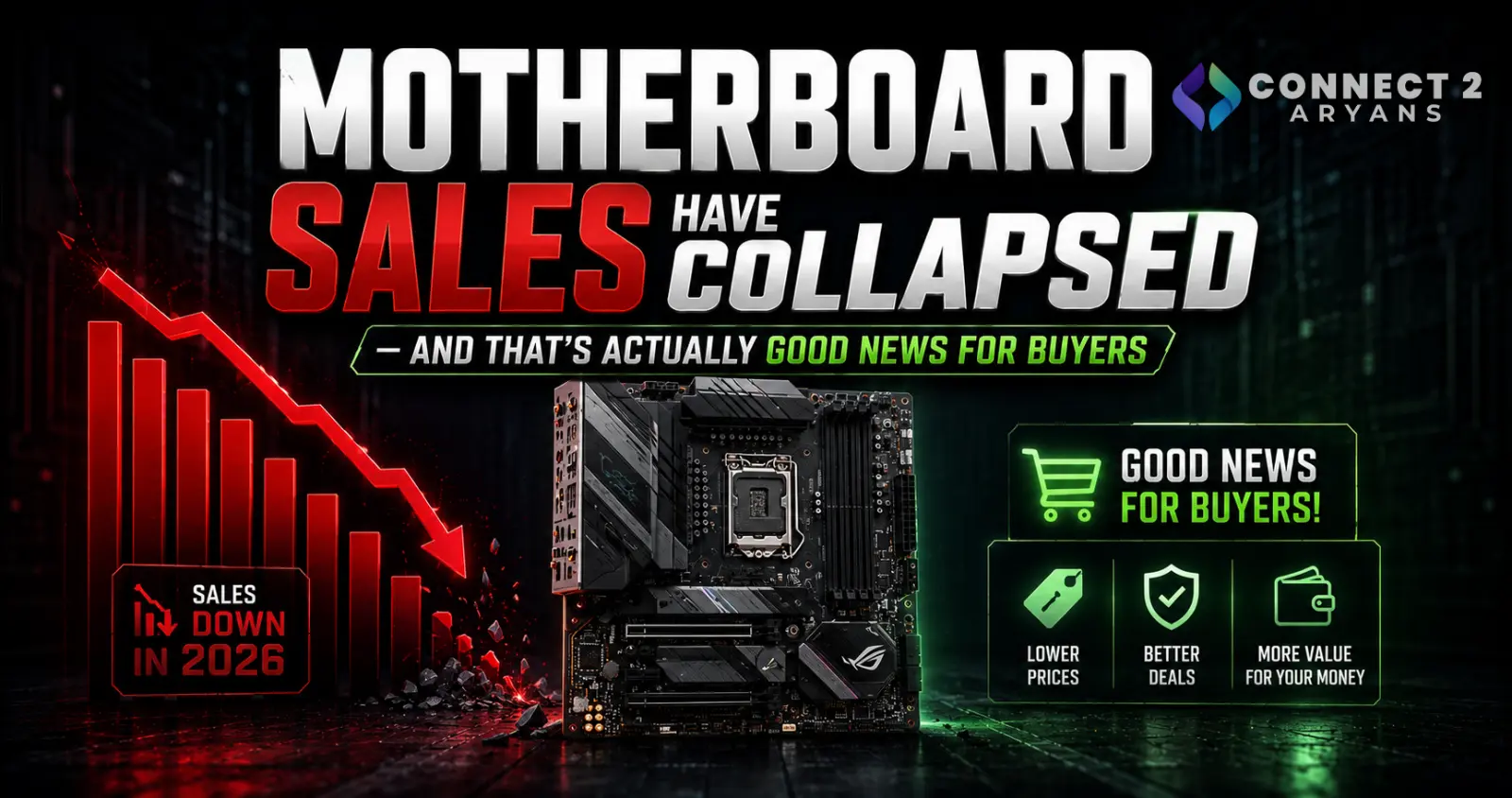
Nearly every part of a PC build has gotten more expensive in 2026 — RAM, SSDs, and increasingly GPUs. But one component is actually moving in the opposite direction, and the reason why says a lot about how deeply the current memory shortage has reshaped the entire PC market: motherboards.
What's Actually Happening
According to a widely-cited report from Taiwanese industry publication Digitimes, the four largest motherboard manufacturers in the world — ASUS, MSI, Gigabyte, and ASRock — have all drastically downgraded their 2026 shipment targets, in what's being described industry-wide as a genuine collapse.
- ASUS, the industry leader, sold 15 million motherboards in 2025 but shipped only 5 million in the first half of 2026 — a steep, sudden drop
- ASUS is now reportedly fighting what's been called a "defensive battle" just to reach 10 million units for the full year — which would be its lowest annual output in over a decade
- MSI, Gigabyte, and ASRock are all expected to see similar declines
Why This Is Happening — It's Not a Motherboard Problem
Here's the key detail: motherboards themselves haven't been hit by the same direct supply shortage crushing RAM, SSDs, and GPUs. The actual cause is simpler and more indirect — people have largely stopped building new PCs, because the other components they'd need to pair with a new motherboard have become too expensive to justify the purchase.
As one industry analysis put it plainly: a motherboard has no standalone value without a CPU, RAM, storage, and a case to go with it. If builders can't justify buying those other parts, they don't need a new motherboard either — regardless of how affordable or available motherboards themselves remain.
A secondary factor compounding this: NVIDIA's RTX 50 series has seen limited updates and no confirmed refresh since launch (the rumored RTX 50 Super remains delayed), leaving fewer compelling reasons for gamers to build a new high-end system in the first place.
The Silver Lining for Buyers
This is where the story actually gets useful if you're planning a build. Because motherboards are sitting unsold on shelves rather than facing genuine supply shortages, board partners have real incentive to move existing inventory — and some analysis has specifically pointed to motherboards as one of the few PC components where prices are trending down rather than up right now, even as memory and storage costs climb steadily.
- If you're building a new PC and can source your RAM, storage, and GPU sensibly (older platforms, reused components, or careful sizing), a motherboard purchased right now may come at a genuinely better price or with stronger promotional deals than you'd see in a normal market
- This is a rare bright spot in an otherwise difficult component market for builders in 2026
Not All Bad News for the Manufacturers Either
It's worth noting this isn't necessarily a crisis for the companies themselves. ASUS specifically addressed the situation on an earnings call, arguing its strong brand value and expanding AI-related business lines would help it weather the downturn in DIY motherboard sales. Gigabyte and ASRock are pursuing similar AI-driven revenue diversification — for these companies, the consumer motherboard slump is a real but manageable part of a much larger business, rather than an existential threat.
What This Means If You're Planning a Build
- Motherboards are a good place to look for deals right now — check current promotions and pricing from ASUS, MSI, Gigabyte, and ASRock, since this is one of the few categories where market pressure is pushing prices down rather than up
- Pair this with smart choices elsewhere in your build — combining a well-priced motherboard with a DDR4 platform (where it meets your needs), reused components, or careful RAM/storage sizing can meaningfully offset the elevated cost of memory and storage right now
- Don't expect this dynamic to last indefinitely — if the broader memory shortage eventually eases and PC building demand recovers, motherboard pricing and availability will likely normalize back toward typical market conditions
Final Thoughts
The motherboard market's collapse is really a symptom of the broader 2026 memory crisis rather than a separate problem — but for once, it's a symptom that actually benefits buyers rather than hurting them. If you're planning a build and can manage your RAM, storage, and GPU choices carefully around current pricing, this is genuinely one of the better moments in 2026 to shop for a motherboard specifically.
Browse our full range of Motherboard options from ASUS, MSI, Gigabyte, and ASRock on Connect2Aryans, with warranty support included.