
Choosing the Right Professional Headphones
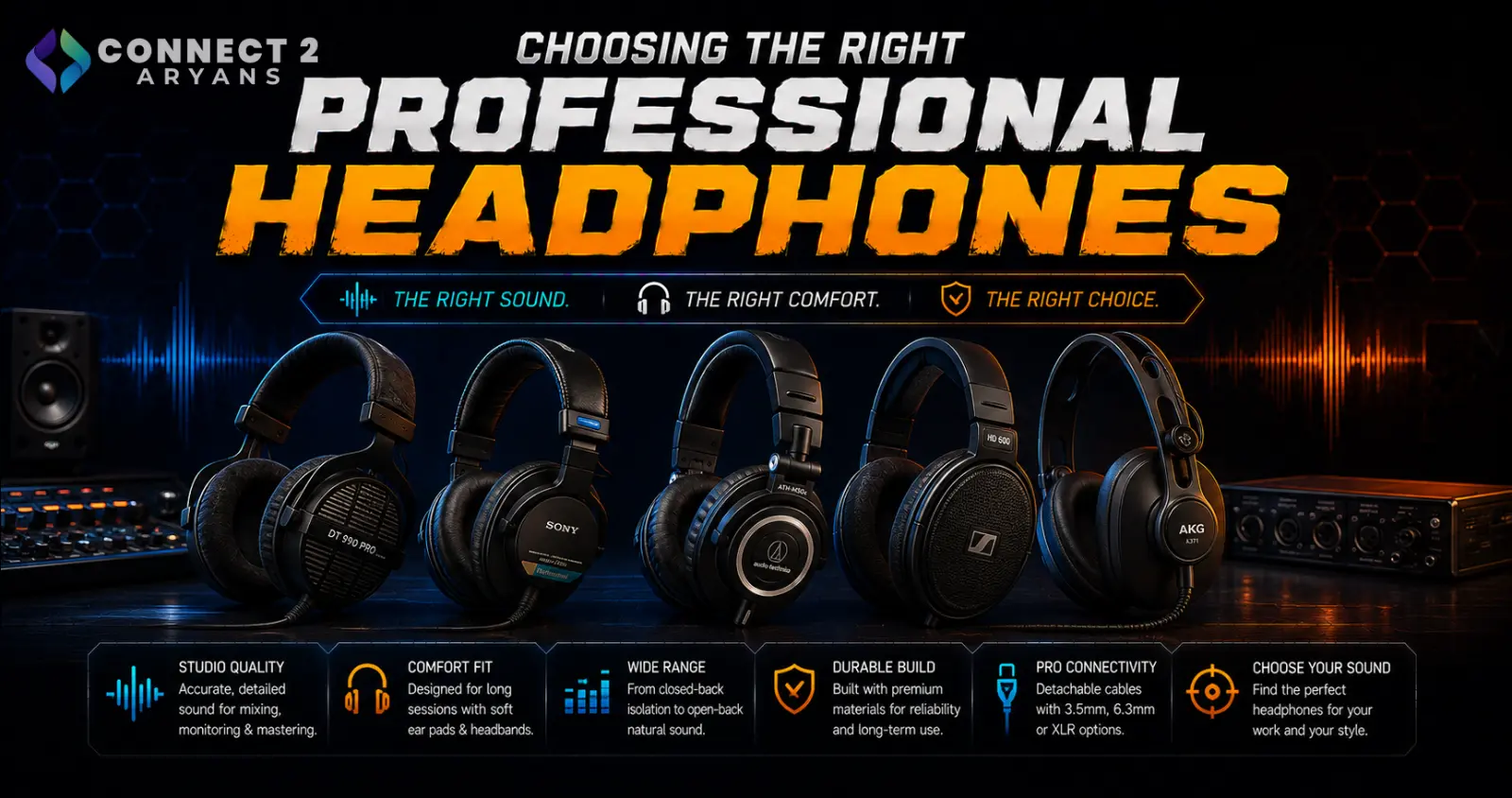
Professional headphones aren't judged on bass impact or RGB lighting — they're judged on accurate sound, comfort over long work sessions, and how well they help you focus or communicate clearly. Here's what to look for in a Professional Headphones purchase.
Step 1: Prioritize Accurate, Flat Sound
Unlike gaming or consumer headphones tuned for exciting bass, professional headphones aim for accurate reproduction:
- Flat/neutral sound signature — represents audio as close to the original recording as possible, important for audio editing, mixing, or critical listening
- Avoid headphones with heavily boosted bass or treble if your work depends on hearing audio accurately, since exaggerated tuning can mislead editing decisions
- For general work calls and everyday listening, slight tuning preferences matter less — accuracy becomes most important specifically for audio-focused work
Step 2: Open-Back vs Closed-Back for Professional Use
- Closed-back — better noise isolation, prevents sound leaking to others nearby, the practical choice for shared offices, calls, and most everyday professional use
- Open-back — offers a more natural, spacious soundstage often preferred for critical mixing and mastering work in a quiet, private studio space, but leaks sound and isolates poorly
Rule of thumb: closed-back suits the vast majority of professional use — calls, general work, shared spaces. Open-back is a specialist choice mainly for dedicated audio production work in a quiet room.
Step 3: Active Noise Cancellation (ANC)
- ANC actively reduces ambient background noise, useful for focus in open offices, co-working spaces, or noisy home environments
- Particularly valuable for calls, helping you hear clearly and reducing the background noise transmitted to the other person
- Not essential for quiet, private work environments, where the cost premium for ANC may not be worth it
Step 4: Comfort for All-Day Wear
Since professional headphones are often worn for hours during work, comfort matters as much as sound quality:
- Look for breathable ear cup materials that don't trap heat during extended wear
- Lighter headphones reduce fatigue over a full workday compared to heavier models
- Adjustable, well-padded headbands prevent pressure points during long sessions
Step 5: Connectivity for Work Setups
- Wired — reliable, no battery to manage, a safe choice for consistent call quality
- Wireless — convenient for moving around during calls or stepping away from your desk
- Dual-Mode — flexibility to go wired for guaranteed reliability during important calls, wireless the rest of the time
- Tri-Mode — useful if you switch the same headphones between a work laptop, personal PC, and phone throughout the day
Step 6: Built-In Microphone Quality
If you're using these headphones for calls rather than a separate microphone setup, mic clarity matters:
- Look for models with dedicated noise-reduction on the microphone, not just the listening side
- Boom mics (even if detachable) generally offer clearer call audio than mics built directly into the ear cups
Popular Professional Headphone Brands
Common Mistakes to Avoid
- Choosing bass-heavy consumer or gaming headphones for audio editing work, leading to inaccurate mixing decisions
- Buying open-back headphones for a shared office, leaking sound and picking up ambient noise
- Skipping ANC in a genuinely noisy work environment where focus is a real daily challenge
- Ignoring built-in mic quality for a headset primarily used for work calls
Final Thoughts
The right professional headphones come down to accurate sound reproduction, comfort that holds up over a full workday, and connectivity that fits how you actually move between devices — not gaming-tuned bass or flashy features. If calls and clear communication matter most, prioritize ANC and mic quality; if critical listening matters most, prioritize sound accuracy above all else.
Browse our full range of Professional Headphones from A4Tech, Logitech and Plantronics on Connect2Aryans, with warranty support included.